Live 3D access layer from your PLM to every screen — no conversions needed.
Stream massive CAD software assemblies, keep PLM as your single source of truth, and give teams accurate 3D views without extra tools.









Make your 3D and CAD software data work harder across the value chain
Faster sales decisions with live 3D
Instant part identification and AR tracking
Scale knowledge across your workforce
One 3D access layer beats a dozen copies and parallel tools
Screenshots, slides and long email threads.
Screen sharing, PowerPoints and static images in every review.
Fragmented decision trails anddocumentation.
High effort during sales and engineering process.
Sales relies on engineering for every visual change.
Work directly with native CAD data from any connected backend system.
Browser-based sessions for synchronous
collaboration with customers and colleagues.
Central decision log and engineering
knowledge base.
Reuse knowledge and feedback across deals and projects.
Sales can drive visual walkthroughs independently, with engineering always in sync.
End fragmented 3D and CAD software workflows: results from leading manufacturers
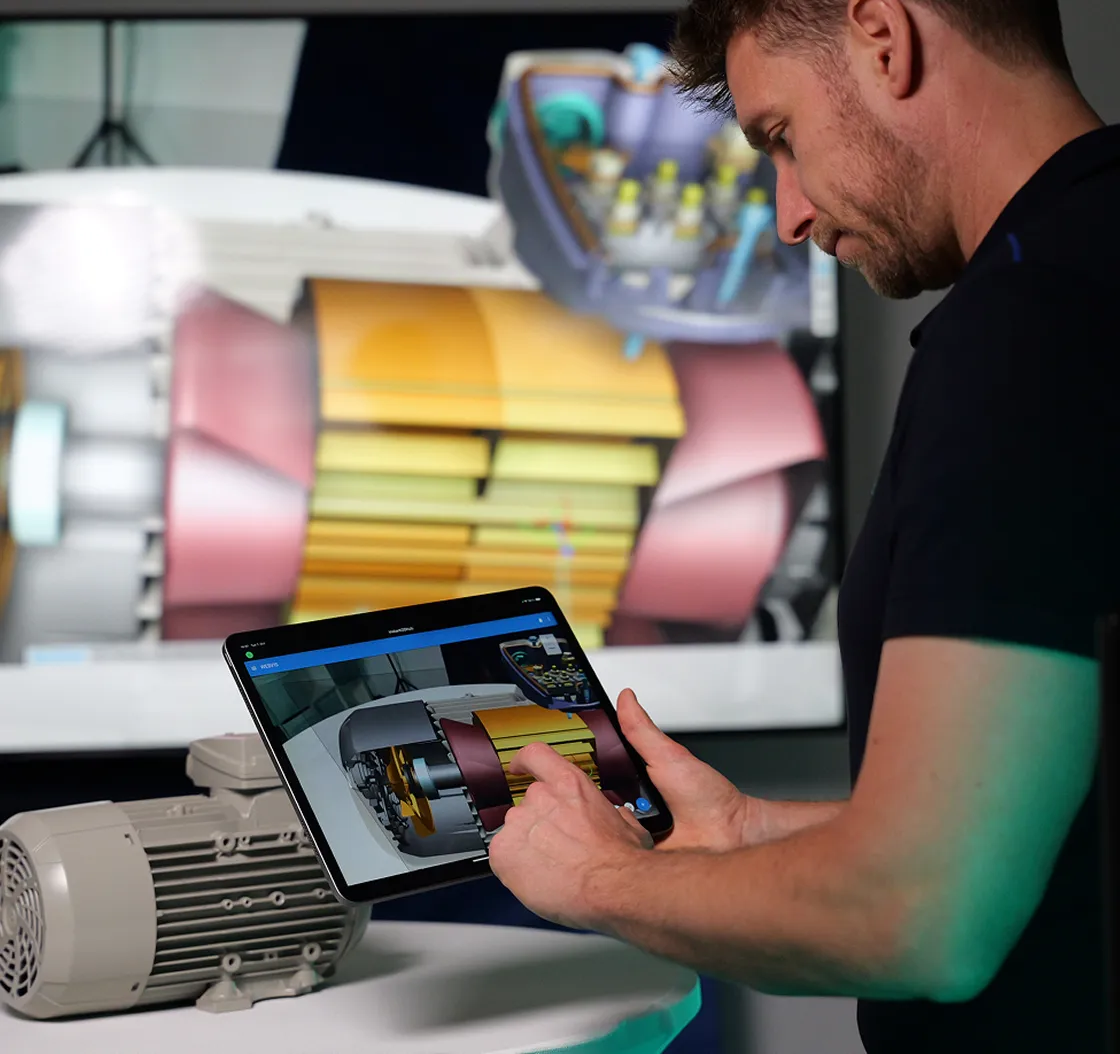

Connect your 3D data seamlessly across systems with instant3Dhub – fast, secure, and without disrupting your IT landscape.
Stream massive 3D data in seconds, cut waiting times, and align teams around one shared view of the product.
Your questions, answered
What does the buying process look like?
Threedy uses a structured, enterprise‑friendly buying process. It usually starts with a discovery call to understand your use cases, data landscape, and stakeholders.
Based on this, you get a live demo, followed by a 1‑month free trial of Threedy instant3Dhub. If needed, we can support your internal evaluation workshops or run a 4–6-week standard proof‑of‑concept tailored to your requirements.Once the scope and requirements are aligned, we move into commercial discussions and contract setup. Most customers start with one focused use case and then expand across teams and departments. Because pricing is usage‑based, you only pay when the system is actively used.
How does Threedy integrate with existing systems?
Threedy instant3Dhub is built to integrate seamlessly into your existing IT landscape. It connects non‑invasively via APIs and standard interfaces to systems such as PLM, PDM, CAD repositories, ERP, and other enterprise data sources, so your systems remain untouched.
No data duplication or file exports are required. Users keep working in their familiar tools while instant3Dhub dynamically links and streams 3D data into the business applications where it is needed. Your existing systems of record remain the single source of truth.
If you want to connect to your systems during evaluation, we can show this in a paid, structured data‑integration PoC in your infrastructure. Any data, any size.
What security standards are supported?
Security is a core design principle at Threedy. instant3Dhub was developed with leading automotive manufacturers over 15 years and meets the stringent IT security requirements of German OEMs.
Threedy instant3Dhub supports enterprise‑grade security concepts, including secure authentication and authorization (such as SSO and role‑based access), encrypted data transfer, deployment options aligned with your IT and compliance requirements, and no uncontrolled file downloads by default.Threedy builds cloud‑native products with flexible deployment options. Most customers choose between on‑premises or private cloud. In all cases, Threedy operations experts work closely with your IT and security teams to align with internal policies and relevant industry standards.
What hardware is required?
Apart from server infrastructure for instant3Dhub, no special client hardware is needed.
instant3Dhub runs on standard devices such as desktops, laptops, tablets, and smartphones. There is no need for local GPUs or heavy clients, even with extremely large data sets and full geometric detail.
3D data is streamed efficiently to your application or browser so that very large models remain usable on lightweight devices.
How long does implementation take?
Implementation is typically fast and incremental. Initial setup for a first use case is often completed within days or a few weeks, depending on the integration depth and internal approvals. Test installations are frequently deployed within 48 hours. Because Threedy builds on existing systems and standards, you can start small and scale without disrupting ongoing operations; if this is not possible or desired, our Customer Success team steps in to support you.
Highly complex multi‑CAD environments with customized end‑user applications or deep integrations into existing tools can take up to around three months. When delays occur, they are usually caused by waiting for external suppliers, holiday periods, or limited internal resource availability.
That is why we put strong emphasis on professional project management with jointly agreed, realistic milestones and a partnership‑based approach involving all parties. Our professional services team and subject matter experts are available to address specific requirements and work closely with you.|
How does Threedy help reduce data protection risks when collaborating on CAD data?
Threedy is designed for collaboration without distributing full CAD files to every stakeholder. Instead of email attachments and multiple uncontrolled copies, Threedy keeps a live connection to the original data source and exposes it for review and collaboration in a controlled way.
To do this, Threedy converts CAD data into a streamable visualization format that can be viewed on any device. This reduces “data sprawl” and helps maintain a single source of truth, because access and updates remain tied to the original repository rather than to duplicated files.
Data protection requirements still depend on your setup, data classification, and chosen integrations. Threedy supports enterprise governance needs such as access control and auditable collaboration workflows, and we can clarify concrete data flows, storage and caching behavior, and deployment options during discovery so they match your compliance expectations.