

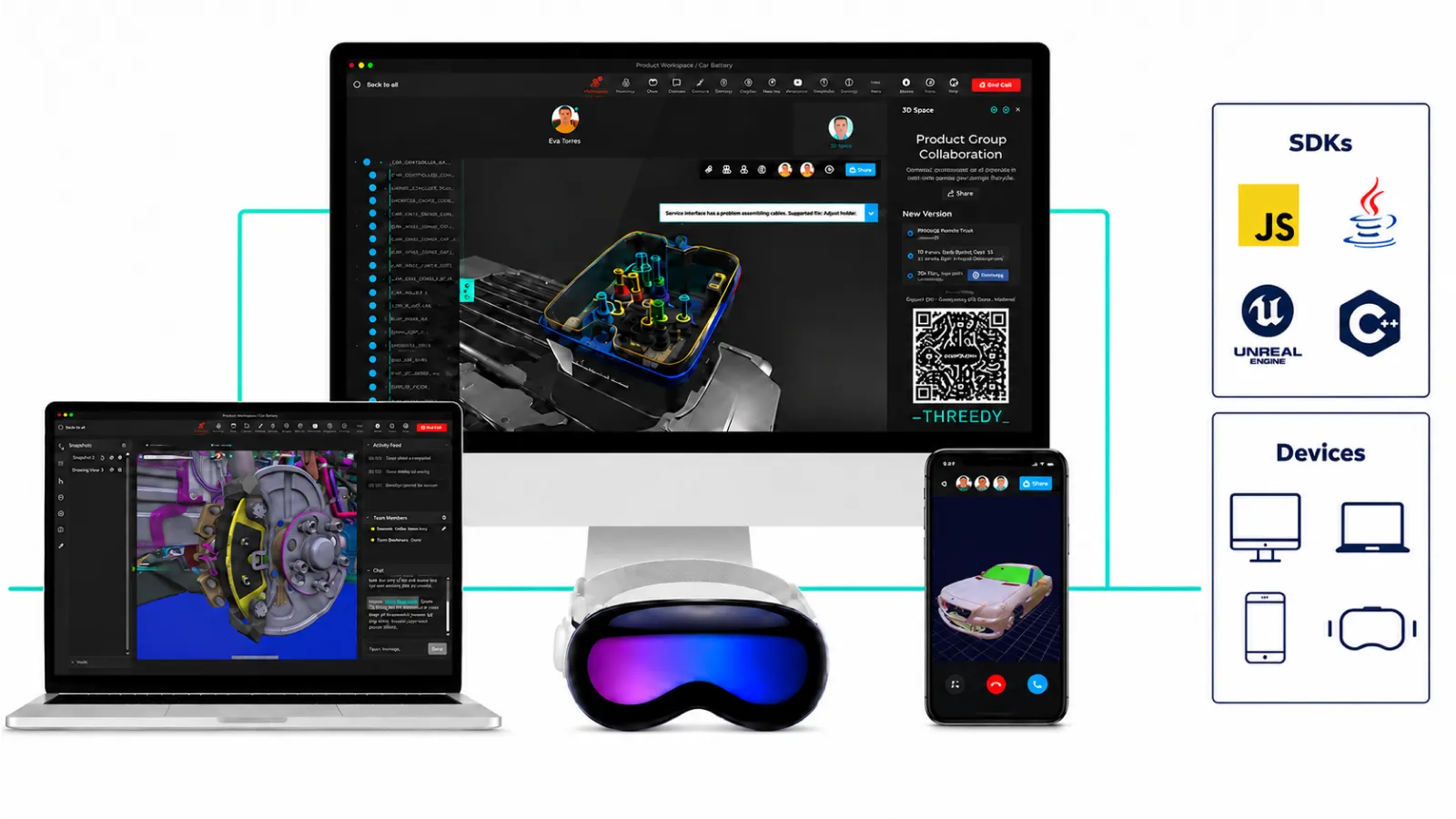
Model-Based Enterprise, Built on Live 3D Data
Every team works from the live 3D model in PLM. No exported drawings or 3D PDFs
to keep up to date.



What Is a Model-Based Enterprise?
The Model Is Ready. The Enterprise Can't Reach It.

One Live Model, Every Function
From Released Model to
Shop Floor, No Drawing Package


Built on Open Access, Proven at Enterprise Scale







Who Works from the Model


Work from the model, not from documents about the model
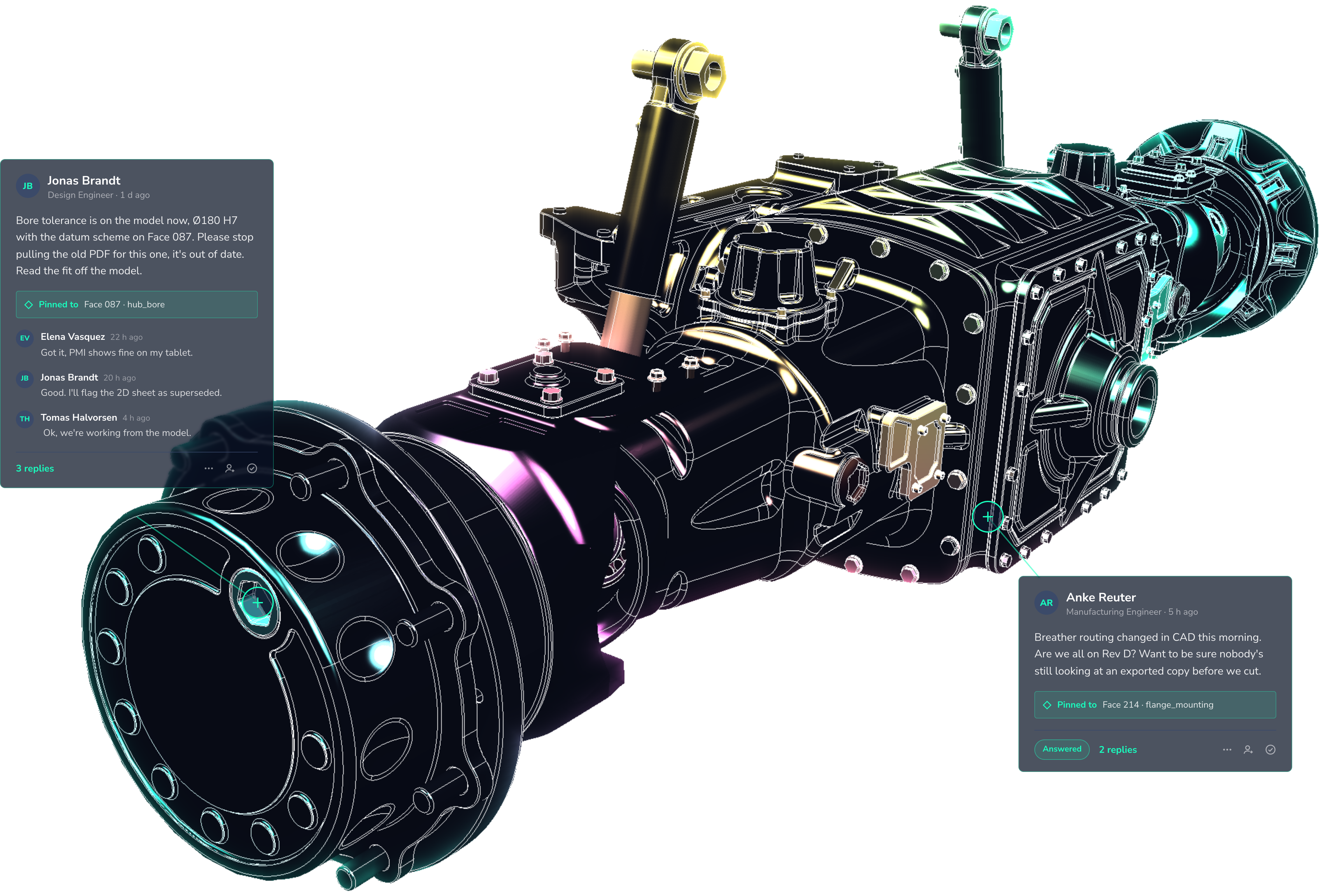
Open the authoritative model directly, with its PMI, structure, and metadata intact. What used to require a drawing package, a PDF, and three screenshots is one live view that's always current.
Give every team the same live truth
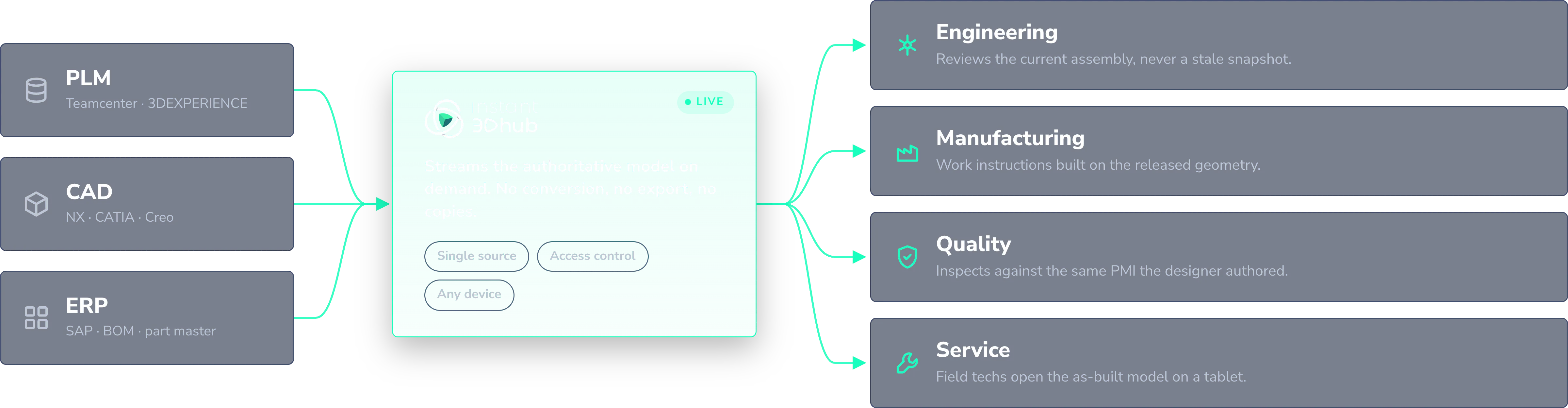
Manufacturing, quality, and service consume the same model engineering released, streamed on demand, scoped by your existing access control. No parallel copies, no version guessing, no "which file is current."
Keep IP protected while you widen access
More teams see the model. Your native CAD files stay in your systems. You set access per part and per user.
Make your model AI-ready
A model-based enterprise is also the foundation for AI in engineering. Because instant3Dhub serves structured, live access to geometry and metadata, AI agents can work on the same authoritative model your teams use, the basis for Agentic 3D.


Talk to an Expert About Model-Based Enterprise


Frequently Asked Questions
What is a model-based enterprise?
A model-based enterprise uses the 3D model, with its geometry, PMI, and metadata, as the authoritative source of product information for every function across the lifecycle. Instead of translating the model into drawings and documents for each team, engineering, manufacturing, quality, and service all work from the model itself. The approach only delivers its promise when the model is genuinely accessible everywhere: live, current, and usable without special tools.
How is this different from MBD or a PLM rollout?
Model-based definition puts the product information into the 3D model, and PLM manages and releases it. Both are necessary, and neither makes the model usable across the enterprise. In most organizations, downstream teams still receive exports, conversions, and screenshots, so the single source of truth quietly becomes many copies. instant3Dhub closes that gap: it streams the released model live from your existing systems to everyone who needs it, so MBD and PLM investments actually reach the whole enterprise.
Do teams need CAD licenses or special hardware?
No. instant3Dhub streams the model to a standard browser on any device: desktops, tablets, and phones, with no CAD licenses, local installations, or GPU workstations. Even very large assemblies stay responsive on lightweight hardware, because only the data needed for the current view is streamed. That's what makes enterprise-wide access economically realistic: everyone can work from the model without the enterprise buying engineering seats for every user.
Which teams and use cases benefit most?
The strongest impact shows up where the model has to leave engineering: manufacturing working to current geometry, quality inspecting against PMI, service identifying parts and building documentation, and suppliers reviewing scoped views of the design. Because all of these consume the same live model rather than separate exports, the benefit compounds: each additional use case gets faster and cheaper to add, instead of requiring its own data pipeline.
How does instant3Dhub support a model-based enterprise?
instant3Dhub provides the visualization layer a model-based enterprise depends on. It connects live to your existing PLM, CAD, and ERP systems and streams geometry, PMI, and metadata on demand, with no exports and no data duplication, so the source systems remain the single source of truth. Access is view-only and governed by your existing permissions, deployment runs on-premises or in your private cloud, and the same live foundation is what makes your data ready for AI workflows ready for AI agents.